When to Call the Emergency Line.
Dispatch triages based on safety and urgency. Here's what gets escalated to emergency response vs a next-day slot.
Call the emergency line:
- Active sewage backup in the house. Toilets overflowing, shower drains coming up brown, basement drain flooding.
- Strong sewage smell inside living space. That's sewer gas getting in past a failed trap or backing up through the tank.
- Visible surface breakout. Sewage coming up in the yard over the tank or field.
- Cover collapsed or missing. Safety issue, especially with kids, pets, or lawn equipment.
- Known failed system the day before a closing or inspection. We'll help you triage.
Book a next-day slot:
- Drains slow but not backed up, no smell, nothing overflowing.
- Soggy spot in the yard that's not actively wet.
- You remembered you're past due on routine pumping.
When in doubt, call. Dispatch will tell you if we should escalate or give you the next available morning slot.
The Flow of an Emergency Call.
The phone rings. Between 7 a.m. and 6 p.m. weekdays, it hits dispatch (Maria or one of her team). After hours, weekends, and holidays, it rolls to the on-call tech's cell. If it rolls to voicemail (rare), we call back inside 15 minutes in most cases.
You describe the situation. Age of the house, when the tank was last pumped, what's happening right now, how urgent, whether kids or elderly are in the house. We prioritize households with vulnerable people.
Triage decision. Most emergencies get a truck within 60 to 90 minutes during daytime hours and by sunrise for middle-of-the-night calls. Extreme emergencies (visible sewage, safety hazards) get a truck as fast as we can dispatch.
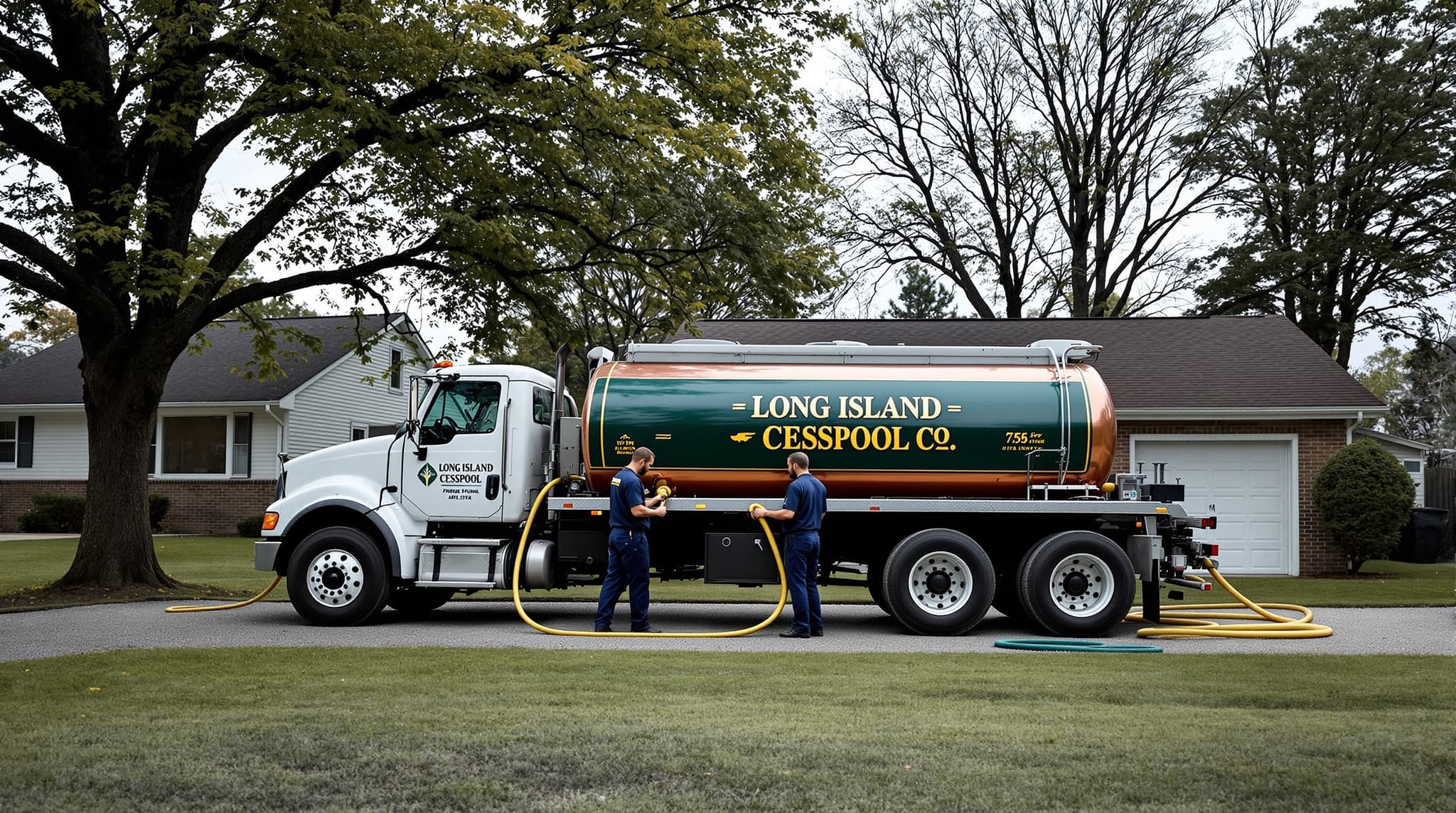
Tech arrives. Truck on the driveway. Tech assesses, gives you the written estimate before the hose comes off. After-hours and weekend work carries a surcharge (reasonable, not gouging, typically 25-35% over daytime pricing). The number is on the estimate before we start.
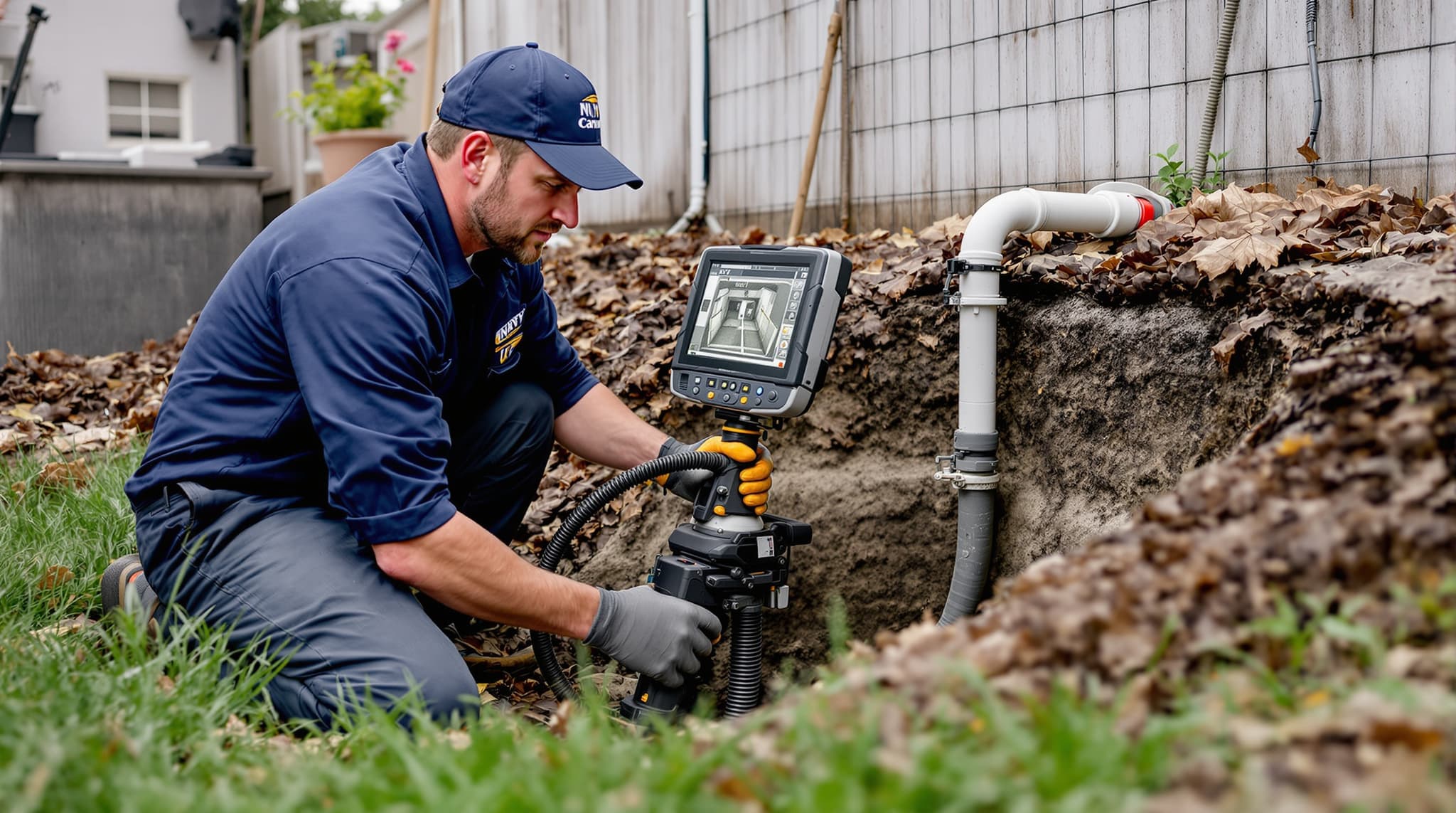
Pumping and stabilization. We pump the tank, clear the immediate emergency, and check for the underlying cause. If it's a broken baffle, a failed field, or a structural collapse, we recommend next steps (repair or replacement).
Follow-up. We call back within a day or two to check on how the system is holding up and whether further repair is needed.
Triage Steps for the 60 Minutes Before We Get There.
If dispatch has scrambled a truck for your house, here are the things that help most during the wait.
Stop adding water to the system. No laundry, no dishwasher, no long showers. Limit flushes to essentials.
Contain the backup area. If sewage is coming out of a basement drain, towel off the floor around the drain and contain the spread. Don't run a sump pump if it discharges to the same system.
Keep kids, pets, and elderly family members away from the affected area. Sewage backups carry real pathogens. Good ventilation (windows open) and physical distance.
If sewage is on the lawn, rope it off. Orange snow fencing, a tarp, or even a few plastic chairs with tape. Dogs and kids explore things.
Do not open the tank cover yourself. Sewer gas (methane, hydrogen sulfide) is genuinely dangerous. Confined-space entry is a trained-crew job. Wait for us.
Gather records if you have them. Last pumping date, last inspection, any previous service invoices. Even rough memory helps the tech diagnose faster.
What Emergency Service Costs.
We don't post specific prices on service pages, but here's the structure. Standard daytime pumping rates apply Monday through Friday, 7 a.m. to 6 p.m. Emergency and after-hours service carries a 25-35% surcharge depending on time of day and day of week:
- Weekday evenings and early mornings: lower-end surcharge
- Weekends (daytime): mid-range surcharge
- Weekend overnight, holiday overnight: upper-range surcharge
All surcharges are on the written estimate before we start. No post-hoc fees. We don't bait-and-switch emergency calls.
Compare that to some operators who quote a "99 dollar emergency call" and then find reasons to bill triple on arrival. Our emergency pricing is transparent and consistent.
See the pricing page for the working daytime ranges.
Why We Answer at 3 a.m.
Cesspool emergencies don't happen at business-convenient times. They happen when the whole family is home, when the bathrooms are in use, when guests arrive. Tom built the after-hours rotation in 2007 after losing three replacement jobs in a row to competitors who just happened to answer the phone at 9 p.m.
Our on-call rotation:
- Two techs per week rotate the after-hours phone
- Rotation changes every Friday at 6 p.m.
- Tom personally covers roughly one weekend a month
If dispatch can't reach the primary on-call tech within 5 minutes, it rolls to the backup. If both are unreachable, it rolls to Tom. We have not missed an emergency call in three years.
Where We Can Get a Truck Fast.
60-minute response target at night: Hauppauge, Smithtown, Commack, Nesconset, Ronkonkoma, Holbrook, Brentwood, Central Islip, Bay Shore, Hauppauge, Bohemia, Lake Ronkonkoma, Lake Grove, Selden, Centereach.
90-minute response target at night: Huntington, Greenlawn, Northport, Kings Park, Stony Brook, Port Jefferson, Sayville, Patchogue, Medford, Holtsville, Islip, West Islip, Babylon, Massapequa, Bethpage, Hicksville, Plainview.
2-hour response (depending on where the on-call tech is sleeping): Riverhead, Calverton, Brookhaven, Shirley, Mastic, Center Moriches, Amityville, Lindenhurst.
East End (Forks): Limited emergency coverage. Call first, and we'll tell you whether we can make it.